

Non-Invasive Prenatal Screening
Gestation Required: From 10 Weeks





What is Non-Invasive Prenatal Screening (NIPS)?
Non-Invasive Prenatal Screening (NIPS), also known as NIPT, is a simple test that combines a blood sample and an ultrasound scan to estimate the likelihood of your baby having certain chromosome conditions.
As your pregnancy develops, tiny pieces of your baby’s DNA (mostly from the placenta) enter your blood. NIPS analyses this DNA to estimate the likelihood of certain chromosome conditions.
Helpful tips for booking your test
- It is best practice to have your ultrasound scan and blood test on the same day. This allows us to confirm important information about your pregnancy, including:
- That the pregnancy is ongoing (viable)
- Whether you are carrying twins
- If there has been a “vanishing twin”
- Any obvious structural concerns or fetal abnormalities
- Aim to book this blood test from 10 weeks + 2 days onwards
(this helps reduce the chance of needing a repeat test) - If you have a higher BMI, we recommend booking from 11 weeks to improve the likelihood of getting a result (fetal fraction is lower in women with increased BMI)
We require a deposit of €120 for this appointment, which reserves the appointment slot for you and covers the cost of the scan. The remaining €380 can be paid on the day after we have successfully done the blood test.
Unsure of your due date?
Click here to use our due date calculator to find out.
Locations available for this ultrasound scan
Grafton Street
Grafton Medical Centric Health
34 Grafton Street
Dublin 2
County Dublin
D02 XY06
NIPS screens for:
Trisomy 21 (Down syndrome) – the most common condition, associated with learning difficulties and sometimes heart or other health problems.
Trisomy 18 (Edwards syndrome) and Trisomy 13 (Patau syndrome) – rare but serious conditions that often lead to miscarriage or very short life expectancy.
The test can also tell you your baby’s sex, if you wish, at no extra cost.
Important: NIPS is a screening test. It does not definitively diagnose a condition or check for all possible health issues, birth defects, or genetic conditions.
Results are typically available within 1 week.
FAQ's
What conditions does the test look for?
The standard test screens for:
- Trisomy 21, 18, and 13
- Baby’s sex (optional)
Additional tests: There is also an optional panel for sex chromosome conditions XXX, XYY, XXY (Klinefelter syndrome), and a missing X chromosome in a girl (Turner syndrome). Routine testing for these conditions is not advised because they often present with a wide range of severity and can be mild or even asymptomatic, which makes the value of early detection ethically complex. In addition, NIPS has lower positive predictive value for sex chromosome abnormalities compared to common trisomies, leading to a higher chance of false-positive results and unnecessary anxiety and invasive testing. The uncertain prognosis and potential for overdiagnosis can also create challenges in counselling and decision-making, so most guidelines suggest offering testing selectively rather than as part of routine screening. If you have a genuine reason for requesting this additional panel, we need a referral letter from your physician so that we can ensure the results and your care are handled appropriately.
Who can have this test?
You can have NIPS if you are:
- At least 10 weeks pregnant
- Pregnant naturally or through IVF (including donor eggs)
- Expecting twins
For twin pregnancies:
- The sex of twins will be reported as one result. If male, one or both of the twins will be male. If female, both twins will be female.
- It cannot assess sex chromosome conditions
- It is not suitable if there has been a “vanishing twin”
When is prenatal screening not suitable during pregnancy?
This test is not suitable when a woman has:
- Cancer, unless in remission, as NIPT may detect cell free DNA (cfDNA) in the maternal blood which is released by a cancerous tumour.
- Received a blood transfusion in the previous 4 months, as studies show that donor DNA in blood transfusion recipients lasts for several months, sometimes longer.
- Had bone marrow or organ transplant, as donor DNA will be present.
- Immunotherapy in the current pregnancy, excluding intravenous immunoglobulin (IVIg) treatment.
- Had stem cell therapy, as this will depend on whether she has received her own stem cells or stem cells from a donor (certain methods of NIPT are not suitable for stem cell transplants).
- A vanishing twin pregnancy (an empty second pregnancy sac or a second pregnancy sac containing a non-viable fetus), as there is evidence to suggest that the placenta can continue to shed cell free fetal DNA (cffDNA) even after the baby has died.
Why might I need to provide a repeat sample?
In about 1% of cases, there may not be enough of the baby’s DNA in the sample to give a result. If this happens, you may be asked to provide another blood sample at no extra cost.
Will I need any other tests?
Yes. NIPS does not replace routine pregnancy care.
It does not check for:
- Physical abnormalities (such as spina bifida)
- Baby’s growth
- All genetic conditions
For this reason, it’s important to attend all recommended ultrasound scans and antenatal visits during your pregnancy.
Trustindex verifies that the original source of the review is Google. We had a beautiful experience in the Ultrasound Suite with the sonographer Diana for our 3D/4D scan. The premises are very comfortable, I had 2 people with me for this scan and we all enjoyed it. The equipment and room set up is excellent and we genuinely felt very catered to in the time we spent with Diana. Thank you so much!Posted on GoogleTrustindex verifies that the original source of the review is Google. I had my pelvic ultrasound with Olesia. Olesia immediately put my mind at ease. She was so gentle, caring and sensitive towards my concerns. The room itself has a very relaxing ambiance which helps!Posted on GoogleTrustindex verifies that the original source of the review is Google. Great location, professional, pleasing ambiance. I had my medical exam (abdominal & pelvis) with Deborah Sudding. Loving chat and explanation.Posted on GoogleTrustindex verifies that the original source of the review is Google. Fantastic staff and image qualityPosted on GoogleTrustindex verifies that the original source of the review is Google. I had a very good experience at this ultrasound clinic. They got me in the same day. Our sonographer was extremely professional and provided all the information we are looking for. They were very fast with providing pictures and details. They were also very kind during a sensitive time.Posted on GoogleTrustindex verifies that the original source of the review is Google. I couldn't recommend The Ultrasound Suite enough . Olesia made such a difficult experience more beareble with her professionalism, absolutely amazing care and compasion. Thank you !Posted on GoogleTrustindex verifies that the original source of the review is Google. I would highly recommend Ultrasound Suit on Grafton st. I had an ultrasound of the pelvic and abdomen with Diana. She was fab and professional. Got an appointment within a few daysPosted on GoogleTrustindex verifies that the original source of the review is Google. Had my scan with Diana and I could not commend her enough for how professional and reassuring she was throughout the whole process.Showing our latest reviews
Take home Package
The ultrasound suite offers a fantastic package for expectant parents to take home after their pregnancy scan.
This comprehensive package includes a detailed ultrasound report and two glossy photograph printouts, capturing precious moments in high-quality images.
Additionally, digital pictures and a video clip of the scan are conveniently sent to you via SMS or email, ensuring that these cherished memories are easily accessible and shareable with loved ones.
Meet
Our Sonographers

Deborah Sudding
Director and Clinical Specialist Sonographer
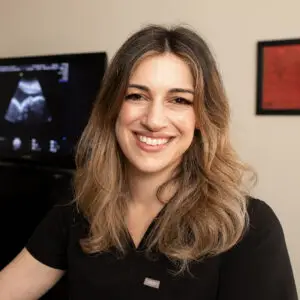
Danyelle Howard Hill
Lead Clinical Specialist Sonographer

Diana Ciornei
Clinical Specialist Sonographer

Olesia Cabric
Clinical Specialist Sonographer
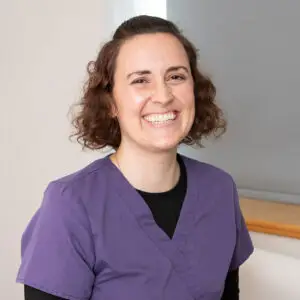
Rebecca Falnes
Clinical Specialist Sonographer
Alyssa Brennan
Clinical Specialist Sonographer
Related Articles
Is It Safe to Fly During Pregnancy? And Other Frequently Asked Questions
Read more